Technology
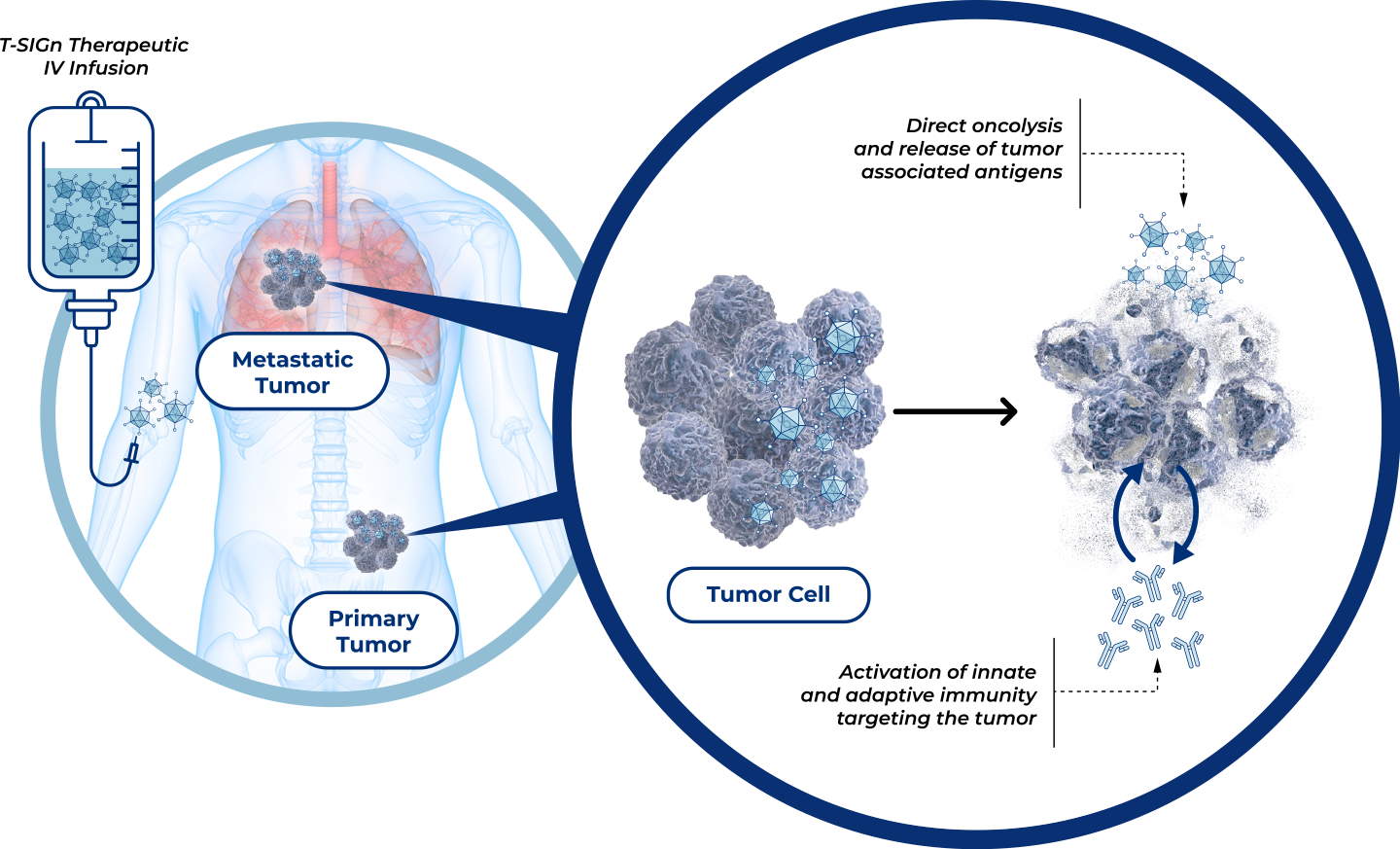
Tumor-Specific Immuno-Gene (T-SIGn®) therapeutics are virus-based, systemically administered, tumor-specific oncolytic immunotherapies that directly attack tumor tissue while simultaneously delivering immune-modulating payloads to the tumor microenvironment. Built on a replication-competent, chimeric group B adenovirus backbone, T-SIGn therapeutics have been optimized via directed evolution to exclusively attack epithelial-cell derived solid tumors – both primary and metastatic – following intravenous delivery.
Once at the tumor site, T-SIGn therapeutics have two mechanisms of action: 1) selective replication within the tumor tissue leading to direct tumor cell killing while sparing healthy tissue; and 2) intratumoral expression of immunotherapeutic transgene payloads. The expression of immunologically active biomolecules and therapeutic proteins remodels the tumor microenvironment and elicits robust antitumor immune responses, enabling the patient’s immune system to recognize, attack, and clear malignant cells. T-SIGn therapeutics are being developed for use as monotherapy, as well as in combination with conventional anti-cancer approaches (e.g., chemoradiotherapy) or novel immuno-oncology modalities (e.g., cell therapies, bispecifics, antibody drug conjugates).
Oncolytic Immunotherapy
T-SIGn therapeutics are designed to directly attack epithelial-cell derived solid tumors, while sparing healthy tissue. Their transgene payloads actively remodel the tumor microenvironment and drive a robust anti-tumor immune response.

Transgene Payloads
T-SIGn therapeutics can deliver a broad range of immunotherapeutic proteins into the tumor microenvironment including antibodies, bispecifics, chemokines, cytokines and other synthetic payloads.

Systemic Delivery
T-SIGn therapeutics are delivered via intravenous infusion providing important advantages vs. intratumoral administration including the ability to attack tumor sites anywhere in the body, as well as a simple administration procedure familiar to clinicians.

Tumor-Specific Replication and Payload Production
T-SIGn therapeutics have demonstrated strong evidence of tumor-selective delivery, replication, and transgene expression at both primary and metastatic tumor sites, as well as promising signs of early efficacy in colorectal cancer. They have the potential to be used in the monotherapy setting, as well as in combination with other anti-cancer agents.